
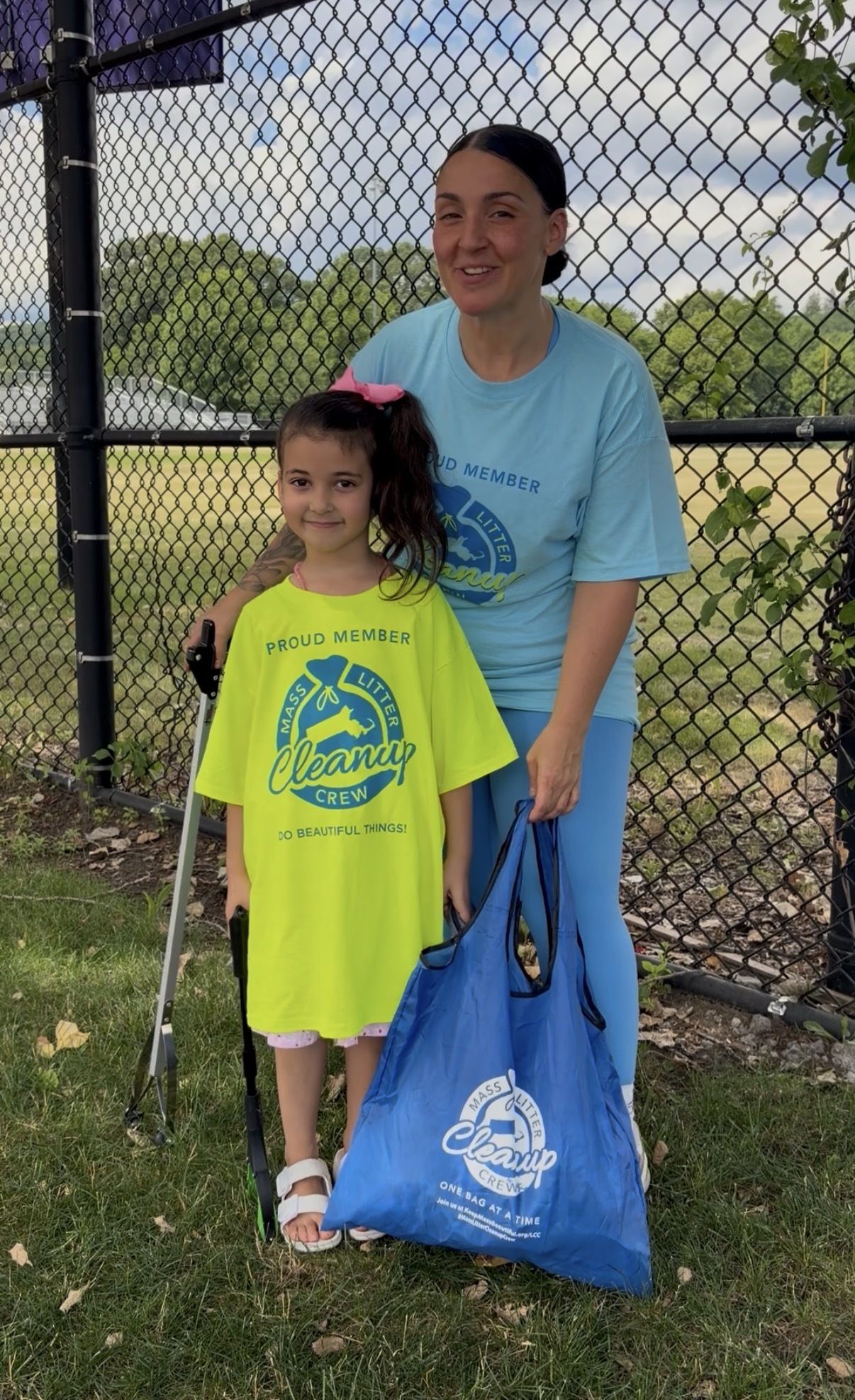
Every time my six-year-old daughter, Jolie, spots a piece of litter on the ground, she points it out.
Sometimes she'll pick it up before I even notice it. Sometimes she'll ask, "Mom, why would someone leave this here?"
Those moments always make me smile because they remind me that caring for our environment isn't something we're born knowing—it's something we're taught.
As parents, we spend so much time teaching our children to say "please" and "thank you." We teach them to share, to be kind, to hold the door for someone behind them, and to clean up after themselves. But somewhere along the way, we've separated those lessons from how we care for our communities.
When we teach children not to litter, to leave a park cleaner than they found it, or to pick up a stray bottle that isn't theirs, we're teaching much more than environmental stewardship. We're teaching responsibility. Pride. Respect. Empathy. We're showing them that they have the power to leave the world just a little better than they found it.
Some of my favorite moments with Jolie are simple afternoons when the weather is beautiful, we grab some gloves, litter grabber tools, and trash bags and head to one of our local parks in Worcester. I intentionally picked parks because it is somewhere she can make the connection in a space she plays at and how much more enjoyable it is when the park is clean.
We laugh. We get curious about the random things we find and we talk about why keeping our local parks and our city clean matters.
When winter come to an end, something else becomes visible besides the grass. The snow melts away and reveals the accumulated litter that had been hidden underneath. Instead of simply shaking our heads and wishing someone would clean it up, we make it an opportunity. It has become a sort of green light that activates Jolie and me to take action. We know it is time for us to clean up what has been hiding for months.
These behaviors have turned into the same habits wherever we go. Whether we're spending a day at the beach, hiking a trail, or enjoying a picnic, bringing an extra bag to collect our own trash, and sometimes a little more, has become second nature. It doesn't feel like a chore. It's simply part of how we show gratitude for the places we enjoy.
I often hear conversations about how to persuade adults to stop littering. While those conversations are important, I can't help but think the bigger opportunity lies with our children.
Imagine if every child grew up learning and believing that littering simply wasn't an option. Imagine if every family spent just one afternoon each season cleaning up a local space in their community. Imagine if every trip to the beach ended with children proudly carrying out every wrapper, bottle, and straw they brought in (along with others they may have found).
Those habits don't disappear when children become adults. They become part of who they are.
Environmental responsibility isn't built through one annual cleanup event. It's built through thousands of small moments that happen at home and out in the community.
As parents, we have an incredible opportunity to shape the next generation, not only by what we say, but by what behaviors and attitudes we model. Our children are always watching. They notice whether we toss a receipt out the car window or walk it to the nearest trash can. They notice whether we leave our picnic site spotless or assume someone else will clean up after us.
The lessons that stick are the ones they see us live. Be the change.
Jennifer Hernandez is the proud mom of a six-year-old environmental helper and the owner of GEM Marketing Solutions, where she empowers nonprofits by amplifying their voices and sharing their stories with the world.